Sourcing standards
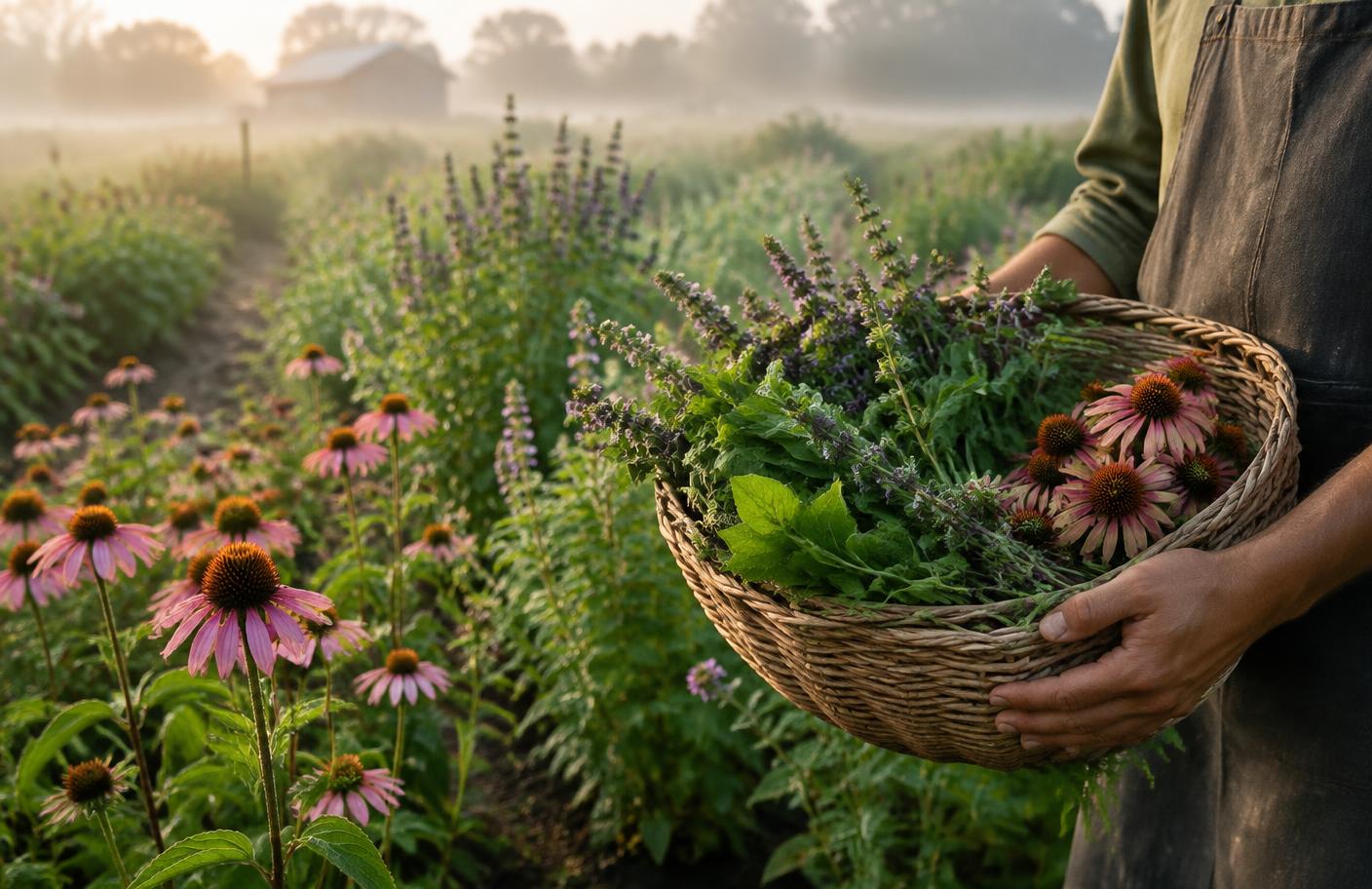
Medicine begins in the soil
The quality of an herbal preparation is set long before extraction — by the seed, the soil, the harvest and the honesty of the supply chain. These are the standards we teach and hold ourselves to.
01
Certified organic, regenerative where possible
- USDA Organic or equivalent certification as the baseline for every cultivated herb.
- Preference for growers practicing regenerative methods: cover cropping, no-till or low-till, and on-farm biodiversity.
- No synthetic pesticides, herbicides, fumigants or irradiation at any point in the chain.
02
Ethical wild harvest — or none at all
- No purchase of species listed as At-Risk by United Plant Savers from wild sources; cultivated or wild-simulated supply only.
- Wild-harvested abundant species (hawthorn, elder, dandelion) gathered under written stewardship practices: never more than a sustainable fraction of a stand.
- Harvesters paid fairly and credited by region.
03
Identity verified, not assumed
- Every lot is identified by macroscopic and microscopic examination, and by HPTLC fingerprinting against a reference standard.
- Particular vigilance for known adulterants — germander in skullcap, leaf in ashwagandha root, non-rosea Rhodiola species.
- Voucher specimens retained for each lot.
04
Tested for what shouldn't be there
- Heavy metals (lead, arsenic, cadmium, mercury) by ICP-MS.
- Microbial load, yeast and mold, and pesticide residue screening.
- Turmeric screened specifically for lead-chromate adulteration.
05
Clean menstruum, clear ratios
- Organic cane or grape alcohol and purified water as the only solvents.
- Every tincture states its weight-to-volume ratio, fresh or dried material, and final alcohol percentage.
- Amber glass storage; no plastic contact during maceration.
06
Traceable from field to bottle
- Each batch links back to farm or harvest region, harvest date, lot number and test certificates.
- Certificates of analysis available on request for every lot.
Conservation watch
Herbs in our library under wild-harvest pressure
Rhodiola
Rhodiola rosea
Wild populations in the Altai and Alps have been heavily overharvested. Source only cultivated root verified by rosavin content.
Echinacea
Echinacea purpurea, E. angustifolia
Listed as At-Risk by United Plant Savers. Wild E. angustifolia should not be purchased; E. purpurea is easily cultivated.